

INTRODUCTION TO EPEE FENCING
Traits of Epee fencing, Resources, FAQ, and more…

WHY EPEE?
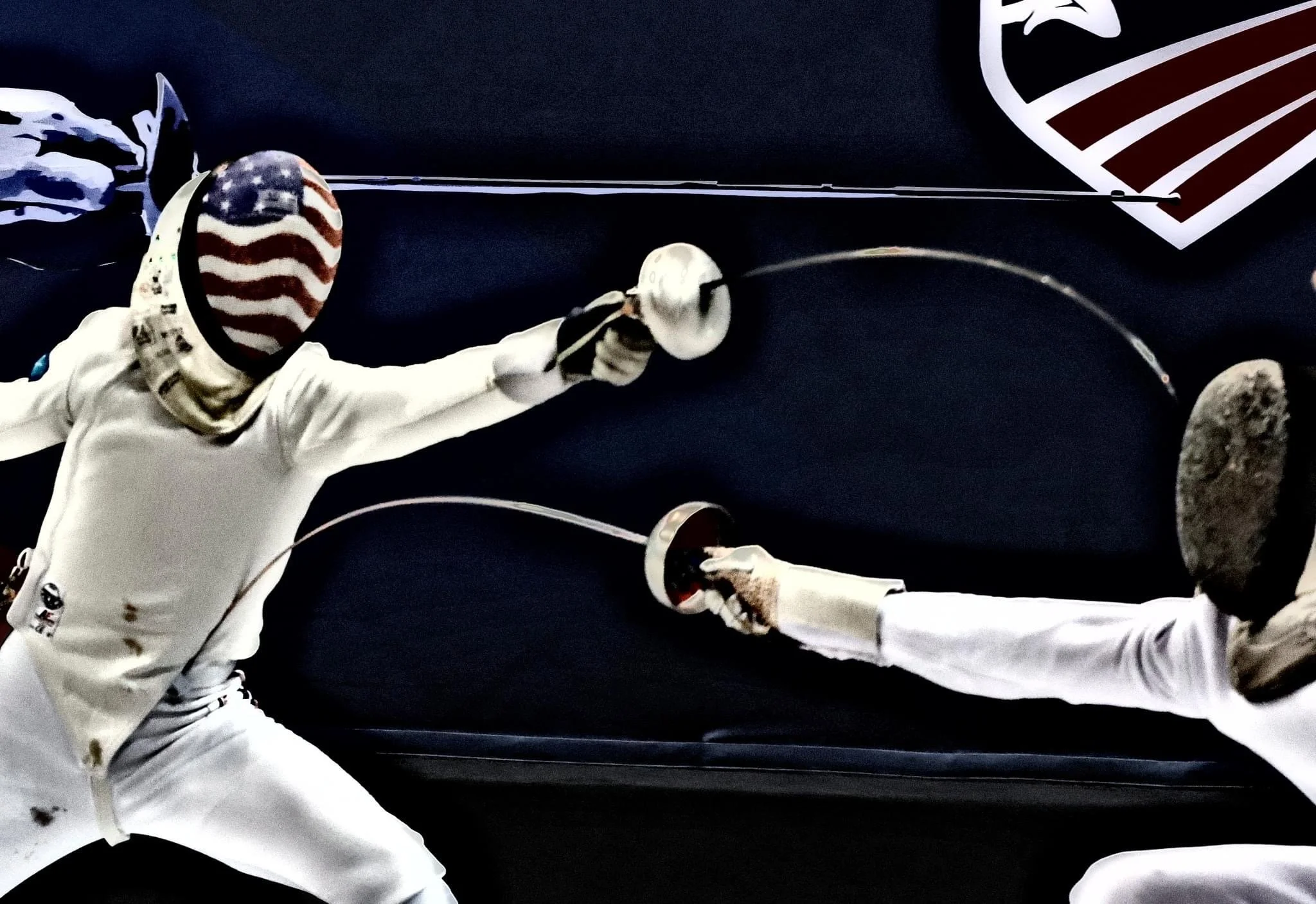
Fencing epee is an exhilarating and intellectually stimulating sport that attracts athletes from all walks of life. What sets epee apart is its unique intensity and strategy, unlike other fencing disciplines, allowing the entire body to be targeted, with every touch crucial and every movement deliberate. This discipline demands precision, patience, and cunning tactics as fencers work to outsmart and outmaneuver their opponents. Epee offers a thrilling physical challenge and hones mental acuity and strategic thinking. Whether it's the thrill of landing a perfectly executed touch or the satisfaction of strategizing and adapting in real-time, epee is a captivating sport that keeps athletes engaged and always hungry for more. Plus, who doesn’t like sword fights?
Rules of Epee Fencing
Epee Rules at Guanyi Fencing Academy
At Guanyi Fencing Academy, we prioritize safety, sportsmanship, and fair play. As such, we adhere to the rules and regulations for epee fencing. The epee is one of the three weapons used in modern fencing, characterized by its more oversized guard and stiffer blade. Below, we have outlined the fundamental rules that govern epee fencing at our academy.
1. Target Area: The entire body is considered a valid target area in epee fencing; unlike foil and saber, where only specific areas are targetable, any touch made with the epee's tip on your opponent's body counts as a valid hit.
2. Right of Way: Unlike in saber and foil, where the right of way (priority) determines who can score a touch, epee fencing does not prioritize right of way. If both fencers make a valid hit simultaneously, both will be awarded a point.
3. Scoring: A valid touch in epee fencing lands with the tip of the epee anywhere on your opponent's body. This includes the head, torso, arms, and legs. Hits made with the side or back of the blade do not count.
4. Resetting: After each valid touch or halt in action, the fencers return to their initial en garde positions. The referee will announce "fence" to signal the start of action again.
5. Safety Rules: Safety is of utmost importance in epee fencing. Fencers are required to wear a mask that covers the whole face, a jacket, pants, underarm protectors, a chest protector for female fencers, gloves, and appropriate footwear.
6. Penalties: Fouls and infringements are taken seriously in epee fencing. Common penalties include stepping off the strip, covering the target area with the non-weapon hand, crossing the back foot behind the front foot, and exhibiting unsportsmanlike conduct. Depending on the severity, each infringement will result in a warning, yellow or red card.
7. Refereeing: Matches are overseen by a referee who ensures the fair application of rules. The referee awards valid points, calls a halt when necessary, and has the authority to issue penalties. Their decision is final and should be respected by both fencers.
Tournaments
If you are new to tournaments, these information will definitely be helpful for you!
-
USA fencing for Regional or National Level tournaments. https://www.usafencing.org/
Ask Fred for Local tournaments. https://www.askfred.net/
Both websites require you to sign up and in order to compete you would have to get a competitive membership with USA fencing.
-
We recommend fencers to check all their weapons, body chords, mask, gloves, and uniform the day before or few days before the tournament.
We also recommend a good nights sleep and plenty of rest.
-
First step is to check in with your USA fencing membership ID. Next, take your two body chords, mask, and glove to the armory, where they will inspect if everything is working and up to standard. Your equipment will be stamped if passed inspection.
-
Most tournaments will use fencing time live to post pools, DEs, and results.
https://www.fencingtimelive.com/
Some smaller local ones might just print things out.
-
Weapons tests are done after you hookup to the reels and done by your referee.
Stretch and warm up before your event.
FAQS
What should I expect? What can I achieve?
-
Yes! Fencing is considered as one of the safer sports and has a relative low risk of injury, with the right gear, proper training, and good sense. It is ranked as the 8th safest Olympic sport.
-
No! Anyone can join! Fencing is an inclusive sport, whether you are just turning 6 or already in your 60s, fencing is always a great sport to consider learning!
-
At Guanyi Fencing Academy, you can expect to not only enjoy a healthy body as the benefit of exercise, but also to mastery fencing skills, pursue and achieve your own goals in fencing, whatever they are! Guanyi Fencing Academy is proudly the home of many national champions, maybe you are the next!
-
A set of fencing suit, a pair of fencing shoe, a mask, and an epee. But worry not! If you want to try out at Guanyi Fencing academy, we got you covered for your gears for the first few weeks!
-
Depending on yourself! Choose your own commitment level at Guanyi Fencing Academy by selecting one of our many class plans. Whether you are a beginner just want to get a taste of fencing or an advanced fencer eager to get better at competitions, one of our class plan will be right for you!